


Joking Hazard
Goliath Poland Sp z o.o.
I went into Joking Hazard expecting a quick digital version of an adult party-card game, and that is exactly where its appeal lies. It is a card game built around creating deliberately inappropriate comic situations, with the humor coming from the combinations players assemble rather than from a long campaign, complicated ruleset, or carefully balanced strategy system. The official online adaptation is free to start, which makes it easy to try before deciding whether its optional purchases fit the way you play.
That simplicity is both its biggest strength and its clearest limitation. When the right group is together, a single round can produce the kind of absurd punchline that makes everyone laugh. With the wrong audience, the same material can feel repetitive or uncomfortable. I would not treat this as a general family card game. The mature rating matters, and the best experience depends much more on the people around the table—or connected to the same session—than on the app itself.
How the digital card game feels in everyday use
A familiar party format with an intentionally unruly tone
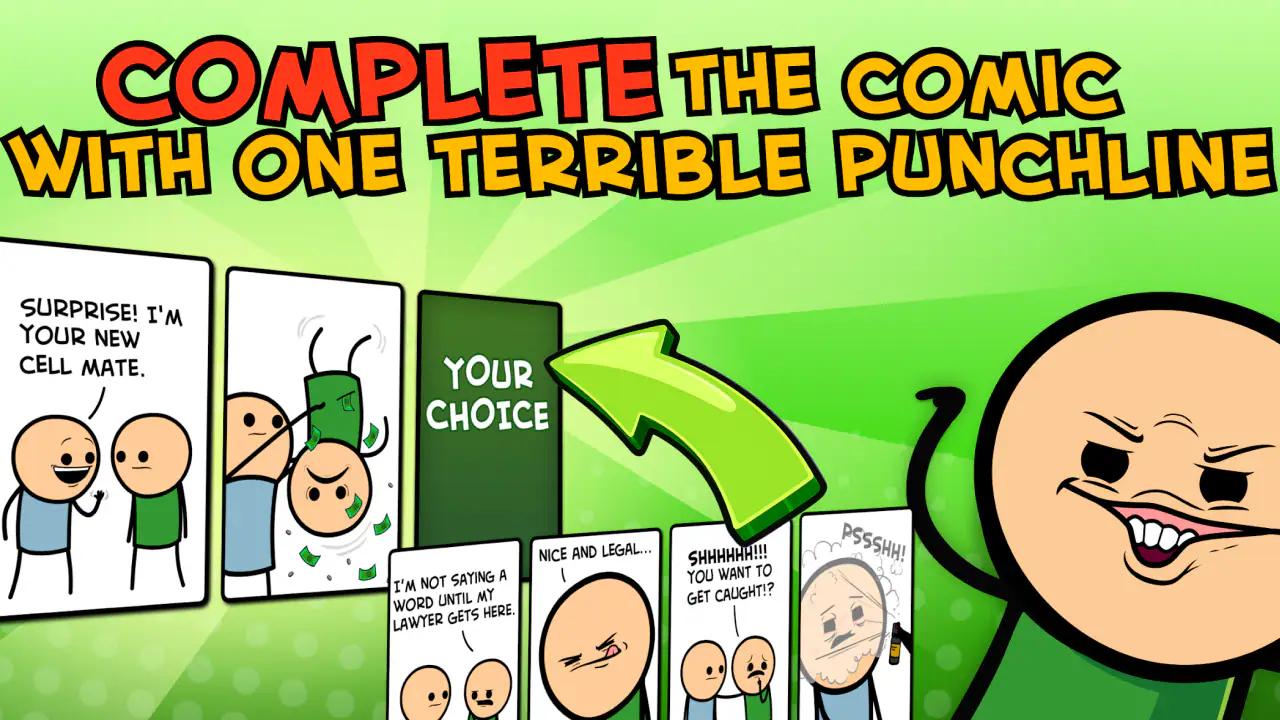
The central idea is easy to understand: players use cards to complete comic scenarios, aiming to create the funniest, strangest, or most shocking result. That makes the game approachable even for people who do not usually play card games. I could explain the basic appeal in a minute, then let the group learn through play instead of stopping for a long rules briefing.
Unlike a traditional collectible card game, the enjoyment is not mainly about building a powerful deck or mastering a deep competitive system. The cards act as prompts for group creativity and judgment. A clever combination can win because it lands perfectly with the people playing, while a technically ordinary combination can become the highlight of the evening if someone gives it a funny interpretation.
That subjectivity is important. There is no universal definition of the best joke. The same card pairing may be hilarious with close friends and completely flat with coworkers or relatives. I found that the app works best when everyone understands the tone before joining. Setting that expectation early avoids the awkward pause that can happen when one player assumes a light cartoon game and another expects mature, deliberately offensive humor.
Related News






Where it fits in a normal evening
A realistic use case is a small group looking for something to play after dinner without committing to a long board-game session. One person can suggest a few rounds, everyone joins, and the game supplies enough structure to keep the conversation moving. It also suits a casual online hangout where people want an activity that leaves room for talking rather than demanding constant concentration.
I would use it differently from a strategy card game. With a serious deck-building title, I might plan a session around learning systems and improving decisions. Here, I would open it when the group wants quick reactions, playful arguments, and a reason to keep inventing captions for ridiculous scenes. If the room is quiet or nobody feels like performing a joke, the game has less energy to draw on.
That makes the social setting part of the product. The app can present the cards, but it cannot guarantee chemistry. A confident group that enjoys dark or crude comedy will probably get more from it than a group that prefers polished, family-friendly humor. In my experience, the best results come when players are willing to explain why a combination works instead of simply waiting for the next turn.
Gallery
What the free entry point really means
The game is free to download and play at its starting point, so there is no upfront purchase required to find out whether the style suits your group. That is useful for a party title because taste is unusually personal here. A free entry gives you a low-risk way to test the tone, pacing, and social fit before spending anything.
Optional in-app purchases range from $1.99 to $48.99 per item. I would read that range as a reason to decide on a spending limit before buying rather than as a promise that paying will automatically improve every session. The value of additional content depends on how often your group returns, how quickly it gets familiar with the available material, and whether variety matters more to you than simply having a short, repeatable party game.
For an occasional gathering, free access may be enough to judge the experience. For a regular group that plays often, extra paid content could be easier to justify if it keeps the jokes from feeling too familiar. I would still make that decision after trying the core experience, because the main question is not whether more cards exist; it is whether your group actually wants to keep playing this particular kind of humor.
The practical tradeoff behind repeated play
Replay value here comes from combinations and reactions, not from a changing adventure, character progression, or a story that unfolds over time. That can be liberating because a session does not require preparation. It can also expose the game’s limits sooner for players who need constant novelty or a strong sense of advancement.
One useful habit is to avoid playing it for too long in a single sitting. A short session can leave the funniest moments feeling fresh, while an extended run may make the format feel predictable. I would also rotate who starts the joke or controls the judging moment when the rules allow it, because giving one person too much influence can make the group focus on that player’s taste instead of enjoying the whole table’s creativity.
Another practical tip is to choose the audience before choosing the game. This sounds obvious, but it matters more here than with many card titles. If you are organizing a mixed-age gathering, a workplace event, or a family night, I would skip this one unless everyone clearly understands and welcomes its mature tone. The mature 17+ rating is not a minor label; it is a useful warning about the kind of social environment the game expects.
How it compares with ordinary card games
Compared with a standard playing-card game, this adaptation is less about probability, tactics, or reading an opponent’s hand. You are not opening it for the quiet satisfaction of making a mathematically strong play. You are opening it for a shared comic payoff. That makes it more accessible to non-gamers, but less satisfying for someone who wants meaningful strategic decisions every turn.
Compared with a conventional party game, it has a narrower identity. Many party games rely on trivia, drawing, word association, or broad family humor. This one is specifically built around adult comic combinations, so it may create stronger laughs for the right group but has a smaller audience. If your friends enjoy improvising around provocative prompts, that focus is an advantage. If they prefer clever puzzles or harmless silliness, another party title will probably offer better value.
The digital format also changes the feel of the original tabletop idea. A physical deck can become part of the room, with players handling cards and reacting to the person across from them. An online adaptation is more convenient for remote sessions and quick access, but the social atmosphere depends on everyone staying engaged through their device. I would choose this app when convenience or distance is the obstacle, not because a screen automatically creates a better party experience.
Who should spend time with it
I think it is a good match for adults who already enjoy irreverent comic-card games and want a convenient online version. It is especially suitable for a friend group that can laugh at unexpected combinations without taking the judging too seriously. People who dislike being put on the spot may still enjoy watching the results, but the game is more rewarding when players actively contribute their own sense of timing and humor.
It can also work for someone who wants a low-commitment way to host a remote social activity. Because the premise is immediately recognizable, you do not need to teach a large rulebook or prepare a campaign. The host’s real job is selecting the audience and keeping the mood comfortable. If a participant is clearly not enjoying the mature material, changing games is better than trying to force the joke.
I would skip it if you are looking for a solo experience, a deep competitive card system, or a game with a substantial progression loop. I would also skip it for children and for groups that want clean humor. Even if the free entry sounds attractive, free is not the same as good value when the central tone is wrong for the people using it.
Performance, access, and what to check first
The app was released on March 28, 2025, and its current version is 1.7.6. It supports devices running Android 6.0 or later, which covers a broad range of Android phones and tablets. Before planning a group session, I would still make sure every participant can install and open the game, particularly if the gathering depends on several people joining at once.
Its reception is encouraging: it holds a 4.4 average from around 5.8 thousand ratings, with more than 100 thousand installs and 835 written reviews. Those figures suggest that the adaptation has found a real audience, but they do not remove the central question of personal taste. A well-rated mature party game can still be a poor choice for a group that prefers strategy, family content, or a slower tabletop atmosphere.
Goliath Poland Sp z o.o. is the developer behind the game. I would keep the app’s role clear in your expectations: it is a focused party-card adaptation, not an all-purpose collection of different card games. That focus helps it get to its main joke-making loop quickly, but it also means there is no reason to install it if that specific loop does not appeal to you.
Small decisions that improve the experience
My first recommendation is to agree on boundaries before the first round. Mature humor can vary widely, and a quick conversation about what people would rather avoid can protect the evening without weakening the game’s edge. This is more useful than trying to solve discomfort after an awkward card combination has already changed the mood.
Second, treat judging as part of the entertainment rather than as a final authority. The funniest result is often the one that sparks a short explanation or argument. If players understand that the decision is subjective, losing a round feels less personal. That keeps the focus on the group’s reactions instead of turning every result into a debate over fairness.
Third, use the free version as a trial period, not as a commitment to future spending. Play enough to see whether your group naturally creates funny combinations and whether the mature tone remains enjoyable after the novelty fades. Only then consider an optional purchase. This is a better value test than assuming a larger content package will fix a group that is already bored with the basic format.
Finally, keep sessions compact when the energy drops. Party games often become less enjoyable when people continue out of obligation, and this one depends heavily on spontaneous reactions. Ending after a strong round can make the next session more appealing than exhausting every possible joke in one night.
My verdict on its value
Joking Hazard is worth trying because the entry cost is zero and the concept is easy to evaluate with friends. Its strongest value is social: it gives an adult group a ready-made structure for creating absurd comic moments, especially when players are separated by distance or do not want to organize a more demanding game night. The 17+ rating, however, should guide the audience from the start.
I would recommend it to the right friend group, with one important qualification: do not buy optional content simply because the game is popular or because a larger purchase is available. The free access is enough to discover whether the humor lands. If your group plays regularly and wants more variety, paid items may make sense; if you only need an occasional laugh, the free starting point may already deliver what you want.
My final view is positive but deliberately narrow. This is not the card game I would choose for strategy fans, children, mixed-age gatherings, or anyone wanting a long-form progression system. I would choose it for adults who enjoy chaotic combinations, can handle subjective judging, and want a quick online party activity. Its real value is not the number of cards on a screen, but how naturally your particular group turns those cards into a shared joke.
FAQs for Joking Hazard
What is Joking Hazard?
Joking Hazard is a party card game based on the dark, unpredictable humor of Cyanide & Happiness. Players combine illustrated cards to create three-panel comic strips, with one player judging which completed joke is funniest. The humor can be rude, awkward, or mature, so it is designed primarily for adults and groups of friends who enjoy irreverent comedy rather than traditional family-friendly gameplay.
How does the Joking Hazard app or game work?
A typical round begins when players draw comic-panel cards and use them to complete a joke or story. One player acts as the judge and chooses the combination they find funniest, most surprising, or most inappropriate. The selected player earns a point, and the judge changes for the next round. The rules are easy to learn, although the fun depends heavily on the creativity and sense of humor of everyone playing.
Is Joking Hazard suitable for children?
Joking Hazard is generally not suitable for children because its comedy may include profanity, sexual references, violence, uncomfortable situations, and other mature themes. Even when the individual drawings appear simple, the combinations created by players can become considerably more adult-oriented. Parents should review the game’s age guidance and consider the group’s maturity before allowing younger players to use it.
Can I play Joking Hazard alone or without an internet connection?
Joking Hazard is mainly intended for multiplayer entertainment, so it is much more enjoyable with friends or other players rather than as a solo experience. Whether offline play is available depends on the particular version you download or purchase. Some digital editions may require an internet connection for online rooms, account features, or matchmaking, so checking the store description and permissions before downloading is recommended.
Is Joking Hazard free to download and does it include in-app purchases?
The price and monetization model can vary depending on the platform and the specific Joking Hazard edition available in your region. Some versions may be paid upfront, while others can include optional purchases for extra card packs, features, or digital content. Before installing, check the official Google Play or App Store listing for the current price, supported devices, subscriptions, advertisements, and any additional purchase requirements.
Pros
- Simple rules make it easy for new players to join quickly.
- Dark humor and unexpected endings create memorable game moments.
- Compact card format makes it convenient to take to parties.
- Works well with different group sizes and play styles.
- Replay value comes from constantly changing card combinations.
Cons
- Mature themes make it unsuitable for children or sensitive players.
- Some jokes depend heavily on personal taste and humor preferences.
- Gameplay can feel repetitive after several rounds with the same group.
- The experience is less enjoyable with quiet or reluctant players.
- Requires creativity and timing
- which may frustrate less imaginative players.


